
Share Linda Nesvisky's obituary with others.
Invite friends and family to read the obituary and add memories.
Stay updated
We'll notify you when service details or new memories are added.
You're now following this obituary
We'll email you when there are updates.
Select your format and elements to print


IN LOVING MEMORY OF Linda Nesvisky
Linda
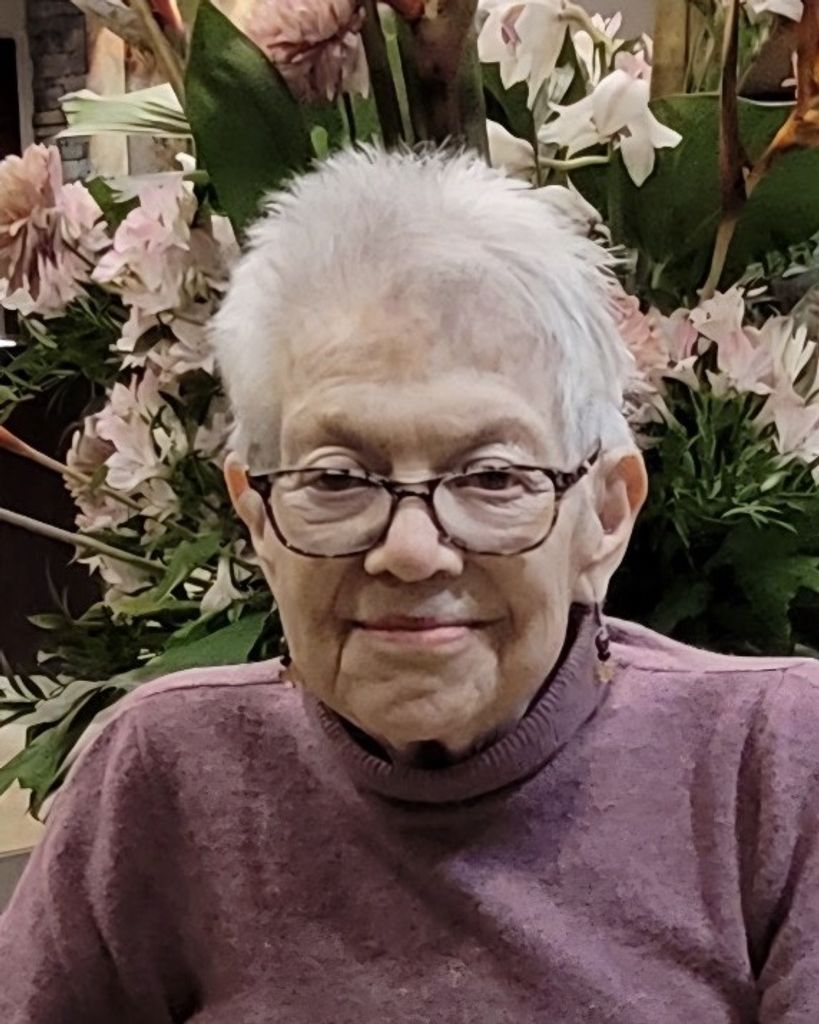
Nesvisky
March 7, 1943 — July 4, 2026
Linda Nesvisky's Obituary
LINDA NESVISKY (nee Singer) on July 4, 2026. Beloved wife of the late Matthew; Loving mother of Claire Rechnitzer (Haim) and Merav Nesvisky; Dear sister of Jerry Singer; Devoted grandmother of Carmel, Adam (Tabatha), Alma (Nate), Tevah, Tali, and Eden; Adoring great-grandmother of Leo. Relatives and friends are invited to Funeral Services, Monday, 12:30 PM precisely at Goldsteins’ Rosenberg’s Funeral Directors Inc., 6410 N. Broad St., Phila.,PA. A livestream link is available here. Int. Montefiore Cemetery. Shiva will be observed at the home of Merav Nesvisky. Contributions in her memory may be made to Jewish National Fund.

Claire and Merav's Eulogy
For as long as we can remember, Ima's email signature has been "Artfully Yours". Indeed, everything she did she did artfully. From the painted landscapes on our childhood nursery walls to her carefully arranged collection of vintage bottles, her novel printed Passover menus to her risqué gingerbread slut cookies adorned with strategically placed raisins and pieces of chopped prunes. She also made sure that we, and our friends, and our kids – did things artfully too. As little kids, we sometimes resented having to make our own Barbie Doll outfits (the price we paid for being allowed to have our own Barbies…) but we did love when she sewed us matching outfits from fabric left over from the clothing she sewed for herself. Birthday and Hannukah gifts were most often cool art supplies or terrific books about art. When we were a little older, there were advanced art camps for us and our friends in her studio, and of course regular field trips to museums and galleries whether we liked it or not. (We mostly liked it – and carried on the tradition with our own kids…). The grandkids spent many happy hours messing around in her art studio – indeed they were allowed to be a lot messier that we ever were. Pastels, charcoal, and fancy artists chalk, finger paints and ink blocks, gouache splattered aprons not as effective as intended…
As all of you know, she wasn't just artful – she was a fulltime and serious artist, With numerous shows and exhibitions to her name, she enjoyed a considerable amount of success and recognition that we were, and are, proud of. She worked in a variety of mediums, but her favorite was etching and photoetching. These techniques required a lot of special equipment, materials, tools and supplies. Our dad often joked that he wished he'd married a piccolo player, especially when he was the one schlepping suitcases full of hefty zinc plates and giant rubber brayers that she'd buy instead of the normal souvenirs one would bring home from trips to Europe.
Moving her studio from place to place and continent to continent was a job and half, but our parents were fortunate to find the perfect house when they moved to Melrose Park, not least because it was previously occupied by renowned sculptor Boris Blai, founder of the local Tyler School of Art. Mom always enjoyed having a little Yichus, or pedigree… Which is one of the reasons she and our dad (well, she really…) chose the Montefiore cemetery, resting place to one of her favorite architects Louis Kahn. She wrote quite a bit about Kahn in her book Jewish Philadelphia: A Guide to its Sights and Stories.
After our dad died and she settled in at her new apartment at Rydal, mom proclaimed herself "The artist in Residence". Ima would go on to teach courses to her community members about art and vintage Israeli films. Always the optimist, she planted trees, shrubs, roses and perennials in her small plot of patio. She soon became involved in the trip committees, planning outings to concerts and museums for her new Rydal friends (who she would refer to as "The Alte-kakers"). She only recently began acknowledging that she was becoming, in her own word, a fossil.
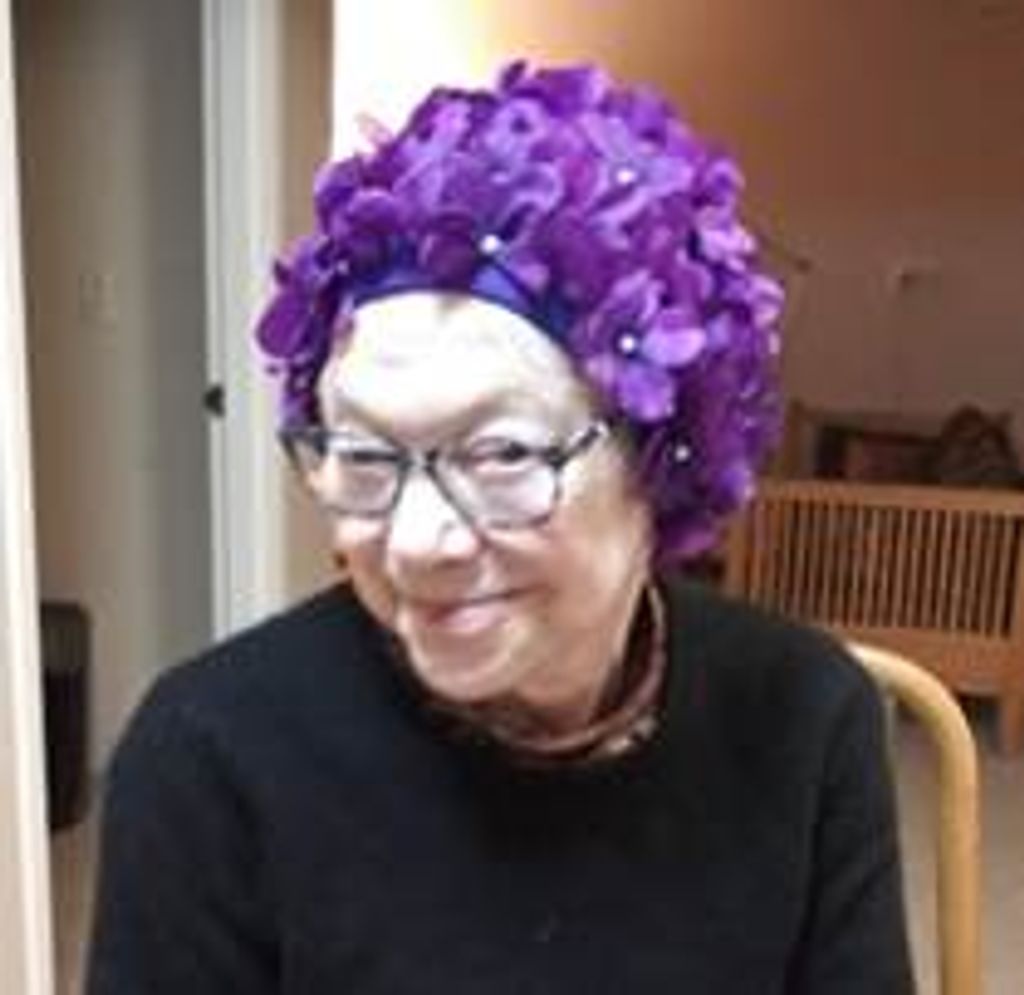
She was proud of her grandchildren and of their partners. We all enjoyed spending holidays around my parents' dinner table. When we were little, Aba told us that Ima's soup was especially delicious because when no one was looking, she'd swim around in it. In hindsight, that's a really weird thing to tell the kids, but we and our own kids believed it nevertheless. Possibly on account of her talent for finding and shamelessly wearing the most outlandish swimming caps ever.
In Jewish tradition, it is considered a blessing to die on a holiday. Given that Ima was quite the American History buff, we'll consider the 4th of July a blessing in her favor. Cue the fireworks.
Haim's Eulogy
There is something deeply moving for me in standing here today as Linda’s rabbi and as her son-in-law.
When I first came into Linda and Matt’s life, I was a secular Israeli, a jazz musician, and the young man who had fallen in love with their daughter. In some ways, that version of me probably made perfect sense to them. After all, they had chosen to build a life in Israel, among other reasons, because they wanted to live fully as Israeli Jews, free from the structures and expectations of institutional religion.
So when, years later, I became a rabbi, it took some adjustment. I am not sure that this new identity fits easily into the picture they had first formed of me. But over time, and with great generosity, they not only accepted this path, they embraced it.
But today, though, I want to speak about Linda.
Linda was an artist. A painter and an etcher. She was focused, intensely so. When she had a goal, she moved toward it with extraordinary determination. She could also be wonderfully eccentric, and I use that word with affection. ---- Linda saw the world through her own eyes.
Perhaps that is why I keep returning today to a verse from the Book of Job, a book and a character with whom Linda had a special connection.
At the end of the book, Job says to God: לְשֵׁמַע אֹזֶן שְׁמַעְתִּיךָ, וְעַתָּה עֵינִי רָאָתְךָ.
“I had heard of You by the hearing of the ear, but now my eye sees You.”
Linda knew something about Job. She knew something about the body and its aches, about suffering that arrives again and again, sometimes almost with the persistence of the Book of Job itself. But I suspect that Linda's connection to Job was also deeper than suffering.
Job refuses easy answers. Words are spoken to him endlessly. His friends explain. They theologize. They construct systems. Yet, Job continues to look.
“I had heard You with my ears, but now my eye sees You.”
For Linda, I think, seeing mattered.
Her religiosity, if I may use that word, came through art.
A theological argument might not move her. A sermon might or might not succeed. But an image, a line, a shape, a texture, the pressure of an etching into a surface, these could open a door.
The Jewish tradition has a remarkable understanding of the artist. When the Torah speaks of Bezalel, the artist who created the Mishkan, it says that he was filled with חכמה, תבונה, and דעת, wisdom, understanding, and knowledge.
The rabbis make an astonishing claim. They say that Bezalel knew how to join the letters with which heaven and earth were created. For the rabbis, the artist does something very close to creation. The artist takes what is scattered, color, line, surface, and form, and brings them together until something appears that was not visible before.
Perhaps this was Linda's way of encountering the world.
She lived in Israel for more than two decades. And because she did, Claire was there. And because Claire was there, I met her. It is one of those strange chains of a human life that we usually understand only when looking backward. One decision leads to another. A country. A journey. A meeting. A marriage. Children. Grandchildren. An entire family history grows from things that, at the time, may have seemed simply like the next thing one had decided to do. Linda and Matt were enormously generous to us. And they were wonderful grandparents. Their love for their grandchildren was real, present, and tangible.
Today, we see the full picture only imperfectly. Grief always brings us too close to the canvas. We see one line, one shadow, one dark patch of color, and we cannot yet step back far enough to see the whole. Perhaps, in time, we will. And perhaps this is one final lesson Linda, the artist, leaves us.
- To look.
- To lookcarefully.
- To resist the easy answer.
- To notice the line, the shape, the strange and unexpecteddetail.
And, as Job discovered after so many words had been spoken, to understand that sometimes hearing is not enough. “I had heard You with my ears, but now I see You with my eyes.”
Linda, זיכרונה לברכה. May the work of her hands, the images she created, the family she loved, and the lives she helped shape remain before our eyes.
And may her memory be a blessing.
Funeral Services for Linda Nesvisky
Linda Nesvisky

Monday
Goldsteins' Rosenberg's Funeral Directors, Inc.
Starts at 12:30 pm (Eastern time)
Linda Nesvisky's Guestbook


Visits: 231
This site is protected by reCAPTCHA and the
Google Privacy Policy and Terms of Service apply.
Service map data © OpenStreetMap contributors